
About Emergency Preparedness
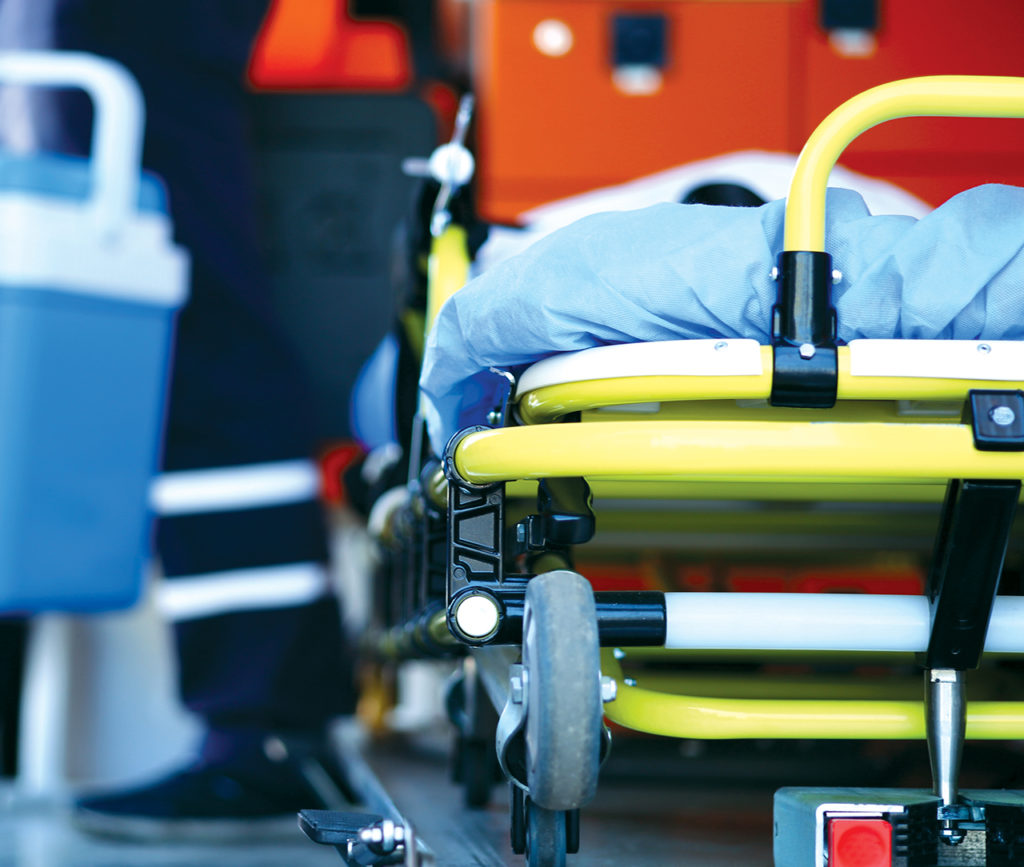
It’s time to change the way California thinks about disaster response. The COVID-19 pandemic showed that hospitals can quickly mobilize to provide flexible approaches to patient care during a disaster. The state must draw upon these lessons to prepare differently so the next crisis will be less severe. Given California’s size and complexity, the health care disaster response system of the future must be nimble enough to respond to any catastrophe. View more information on hospital disaster preparedness.
Portable Mass Fatality Remains Storage
Military, federal and state agencies have worked with Mortuary Response Solutions (MRS) to employ a mass fatality management and storage solutions for mass fatality events. MRS has designed, engineered and tested the four types of refrigeration systems to support storage of human remains.
Coroners’ Mutual Aid & Mass Fatality Management Planning Program
The Coroners’ Mutual Aid & Mass Fatality Management Planning Program is an integral component of the California Law Enforcement Mutual Aid System.
Mass Fatality Management Guide for Health Care Entities
Developed by LA County EMS Agency, The Mass Fatality Management Guide for Healthcare Entities guidance for hospitals aims to assist in the effective management of mass fatality operations.
Mass Fatality Management Plan Template
This Mass Fatality Management Plan Template aims to assist hospitals in the development of their mass fatality management plans. It provides a structured format outlining essential components and considerations for effectively responding to mass fatality incidents, ensuring that facilities are prepared to manage such emergencies in accordance with relevant regulations and best practices.
CHA Checklist: Hospital Mass Fatality Planning
To enhance response, hospitals must coordinate their mass fatality planning activities with county and regional planning efforts. Education, training, and exercises should be implemented to ensure that staff are familiar with the plan and that it is practical. Additionally, the hospital’s mass fatality plan must align with state and local regulations, the National Incident Management System, and The Joint Commission’s standards.
Best Practices for First Receivers of Mass Casualty Incidents Involving Hazardous Substances
The resource outlines the essential roles and responsibilities health care personnel providing immediate care to victims of mass casualty incidents, particularly those involving hazardous materials.
Managing Mass Casualty Events: Lessons Learned from the Aurora Movie Theater Shooting
This webinar offers insight and lessons-learned from the Aurora, Colorado Theater Shooting.
Fatality Management Resources
This collection of fatality management resources was compiled by the Greater New York Hospital Association and includes challenges, innovations, and lessons-learned from mass fatality incidents:
Overflowing Morgues: More Lessons from COVID-19
2020 Virtual Disaster Conference
Experts from a community hospital and a stand-alone acute care facility share stories and describe how the continuity of decedent management is challenged when existing resources are beyond capacity.
Rapid Disposition & Emergency Department Flow in Mass Casualty Incidents
2023 Disaster Conference
Overcrowding makes Mass Casualty Incident (MCI) planning increasingly difficult for hospital emergency departments (EDs). MCI plans must incorporate tactics for rapidly and safely clearing space in EDs to accommodate the influx of casualties. The goal of this planning is to provide the greatest good for the greatest number of patients, both at the hospital before the disaster and for new casualties being received. Stanford experts will review how this planning is designed and how it has been refined with years of practice at their facility.