
About Emergency Preparedness
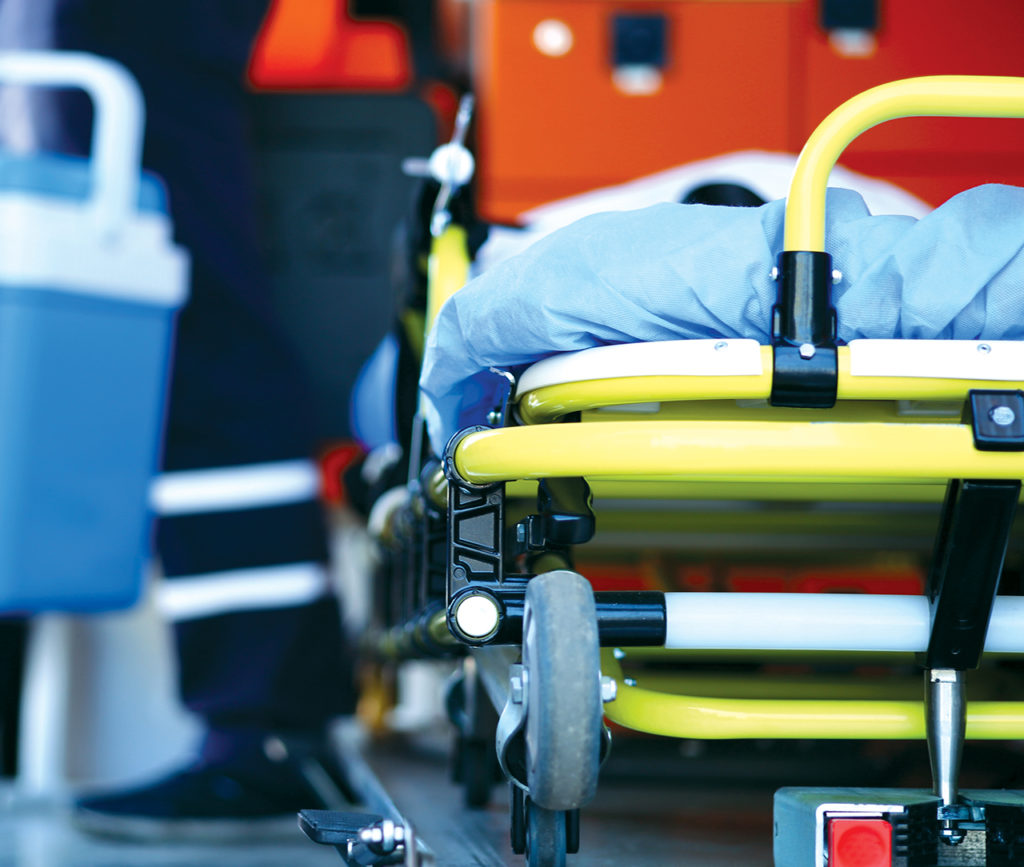
It’s time to change the way California thinks about disaster response. The COVID-19 pandemic showed that hospitals can quickly mobilize to provide flexible approaches to patient care during a disaster. The state must draw upon these lessons to prepare differently so the next crisis will be less severe. Given California’s size and complexity, the health care disaster response system of the future must be nimble enough to respond to any catastrophe. View more information on hospital disaster preparedness.
What is “Redundant Communication”?
Redundant communication refers to having multiple back-up communication modalities and is imperative in emergency preparedness planning. Past experience demonstrates that hospitals cannot depend on just one or two means for communication.
What is the Government Emergency Telecommunications Service (GETS), Wireless Priority Service (WPS) and Telecommunications Service Priority (TSP) and why should hospitals be enrolled?
Hospitals may benefit substantially in achieving landline and cell communications and restoring communications after a disruption in service with and without a declared disaster.
What are the NIMS IS training requirements for hospital staff and how can these requirements be met?
NIMS courses ICS-100, ICS-200 and IS-700 or their equivalents should be completed by:
Can a hospital utilize a vendor-created NIMS training course? If so, how does the hospital verify that it is NIMS compliant?
Yes, a hospital may utilize a vendor-created or delivered training course. The National Integration Center (NIC) recognizes that many operational aspects of the NIMS, including ICS training, are available through, state, local and tribal training agencies and private training vendors. It is not necessary that the training requirements be met through a federal source.
What qualifications does an instructor need to teach ICS 100, 200 and 700 in the classroom setting?
According to the Federal Emergency Management Agency, the NIMS Integration Center is responsible for facilitating the development of national guidelines for incident management training and exercises at all jurisdictional levels, while individual agencies and organizations are responsible for establishing and certifying instructors.
Does completion of ICS course materials make a hospital NIMS compliant?
No. Completion of ICS courses by appropriate personnel satisfies two of the 14 NIMS Compliance Objectives for Healthcare Organizations (Objective 5 and Objective 6). The remaining objectives must also be met to make a hospital NIMS compliant.
Does a HICS course take the place of the ICS 100, 200 and IS700 courses?
No. A stand alone HICS course does not take the place of ICS 100, 200 and 700, which are specific requirements of the NIMS Objectives.
What are the required drills and exercises for hospitals?
There are different requirements for the various accrediting bodies and grant requirements. For example, the Hospital Preparedness Program grant may require participation in the Annual Statewide Medical Health Exercise.
What is the difference between a tabletop exercise, a drill, a functional exercise, and a full-scale exercise?
According to the Homeland Security Exercise Evaluation Program (HSEEP) there are seven types of exercises, each of which is either discussion-based or operations-based.
What are the steps in planning a drill or exercise?
The initial steps to planning an exercise include identifying: