
About Emergency Preparedness
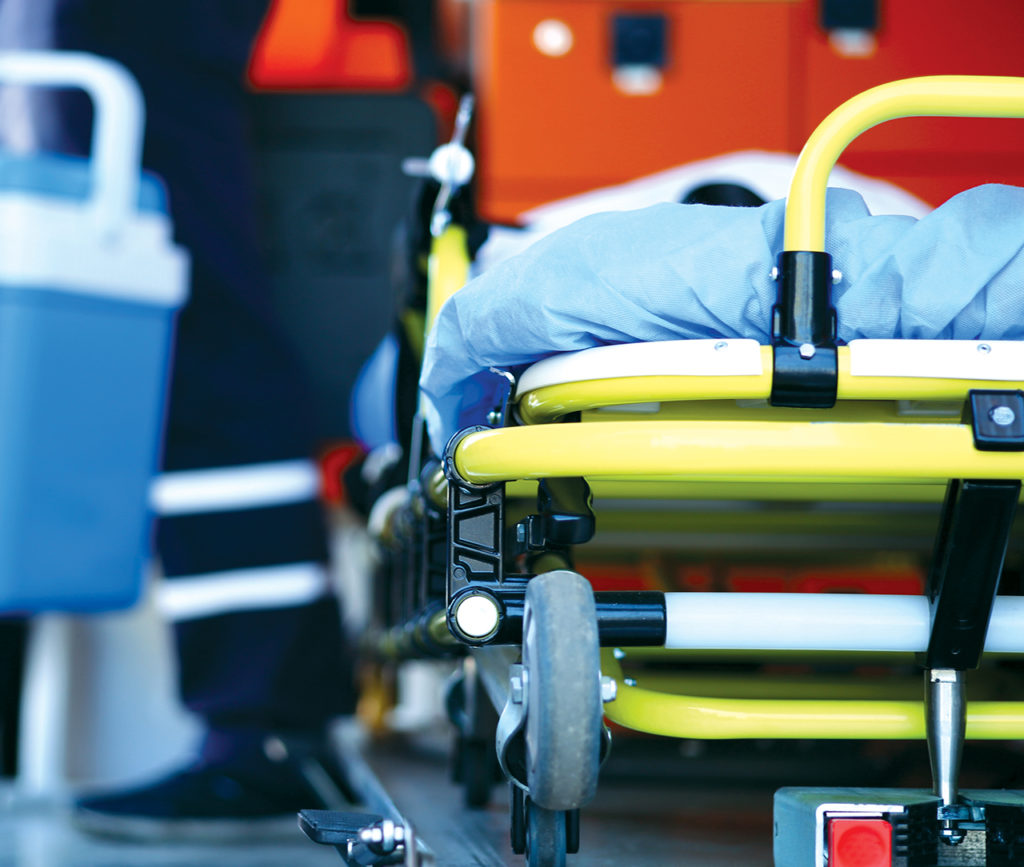
It’s time to change the way California thinks about disaster response. The COVID-19 pandemic showed that hospitals can quickly mobilize to provide flexible approaches to patient care during a disaster. The state must draw upon these lessons to prepare differently so the next crisis will be less severe. Given California’s size and complexity, the health care disaster response system of the future must be nimble enough to respond to any catastrophe. View more information on hospital disaster preparedness.
Coordinating Large Scale Disaster Drills
2023 Disaster Conference
Partnership and cooperation are necessary for effective large-scale drills. Learn best practices from one community trauma center.
FEMA’s Public Assistance Grant Program: A Success Story
2023 Disaster Conference
Sutter Health’s presentation shares a general framework to support facilities in submitting disaster claims to the Federal Emergency Management Agency’s Public Assistance Grant Program.
Being a READY Rural Hospital
2023 Disaster Conference
Rural communities face many challenges and resource limitations. When an emergency arises, it is not the time to scramble to find needed resources. Ideally resource needs have been identified and memoranda of understanding (MOUs) are already in place, ready to access if needed. Rural hospitals are a hub of the community and can lead the way in emergency preparedness collaboration and organization by establishing relationships, contacts and MOUs with business, schools, and community organizations.
Cost-Effective Disaster Exercises
2023 Disaster Conference
In this presentation, participants will learn how to lead cost efficient disaster exercises and incident responses within thematic approaches within the following scenarios: mass decontamination, active shooter, bomb threat and labor action scenarios, and will receive ready-made templates for exercise development.
What are the six critical areas of emergency response according to The Joint Commission (TJC)?
Communication (EM.02.02.01) Resources and assets (EM.02.02.03) Safety and security (EM.02.02.05) Staff responsibilities (EM.02.02.07) Utilities management (EM.02.02.09) Patient clinical and support activities (EM.02.02.11)
What activities are required to evaluate a facility’s response to an event e.g., debriefings, evaluation and improvement plans?
The Joint Commission in EM.03.01.03 requires the deficiencies and opportunities for improvement, identified in the evaluation of all emergency response exercises be communicated to the improvement team responsible for monitoring environment of care issues. NFPA 1600 requires that procedures shall be established to take corrective action on any deficiency identified.
What is a Hazard Vulnerability Analysis?
Hospitals are required to conduct and review their Hazard Vulnerability Analysis (HVA) annually. The HVA is a systematic approach to identifying hazards that may affect demand for the hospitals services or its ability to provide those services. The risks associated with each hazard are analyzed to prioritize planning, mitigation, response and recovery activities. The HVA serves as a needs assessment for the Emergency Management program. This process should involve community partners and be communicated to community emergency response agencies.
How should a hospital’s Emergency Management Program (EMP) relate to plans made by other entities in their community?
Effective emergency management requires planning, cooperation, training and exercising with the entire community. Collaboration should start at the planning phase and continue throughout the entire Emergency Management Program development and implementation.
How can a hospital demonstrate participation in community wide disaster planning?
Local public health departments, local emergency medical services agencies (LEMSA) and the Department of Homeland Security, are all working together to test readiness for various scenarios. Hospitals should participate in the planning for these events as well as working with the Hazard Vulnerability Analysis for each hospital to coordinate community participation with the specific needs of the hospital.
What is all-hazard planning?
Many hospitals used to develop specific plans for a variety of disaster and emergency situations. The Federal Emergency Management Agency (FEMA) now requires that hospitals use an emergency management system that is comprehensive, risk based, and all-hazard in nature.