The newsroom includes access to CHA News, which provides timely information to members every Thursday and is at the core of CHA benefits. In addition, it is also home to resources such as toolkits and talking points designed to help member hospitals and health systems communicate with internal and external audiences on a range of current health care-related issues. Links to CHA media statements and press releases can also be found here.
Newsroom
Draft Trusted Exchange Framework Released for Electronic Health Information
The U.S. Department of Health and Human Services’ Office of the National Coordinator (ONC) for Health Information Technology has released its draft Trusted Exchange Framework. As required by the 21st Century Cures Act, the proposed framework outlines policies, procedures and technical standards for the trusted exchange of health information between networks. Under the proposal, ONC would recognize a private sector coordinating entity to incorporate the framework into a common agreement, to which qualified health information networks and their participants voluntarily agree to adhere. Qualified health information networks would need to upgrade their technology to support an expanded core data set for interoperability, require participants and end users to provide proof of identity, and could charge reasonable allowable costs to other qualified health information networks. Comments on the draft framework are due Feb. 20 by 8:59 p.m. (PT).
Hospital Building Safety Board Posts 2018 Meeting Schedule
The Office of Statewide Health Planning and Development Hospital Building Safety Board has released its meeting schedule for 2018. Dates for Education and Outreach, Structural and Nonstructural Regulations, and Energy Conservation and Management committee meetings are among those included in the schedule. The agency’s next full board meeting is June 21 in Sacramento. For more information, including a complete list of committees and a board roster, visit www.oshpd.ca.gov/Boards/HBSB/.
Training Available for Post-Acute Care Quality Reporting
The Centers for Medicare & Medicaid Services is offering web-based training modules on Section GG of the patient assessment instruments for each post-acute care setting: long-term care hospital, inpatient rehabilitation facility, skilled-nursing facility and home health. Section GG, implemented as a result of the Improving Medicare Post-Acute Care Transformation Act, focuses on patients’ functional abilities and goals.
The interactive training includes background information on the Act and requirements for standardized data collection, as well as specific guidance for completing Section GG for each post-acute care setting.
CHA Releases DataSuite Report on Medicare Quality Programs
CHA DataSuite has released hospital-specific reports providing a one-page historical summary of hospital quality performance and impacts for each of the Centers for Medicare & Medicaid Services three Medicare inpatient quality programs — Value-Based Purchasing, Readmissions Reduction and Hospital-Acquired Condition Reduction — from federal fiscal years 2016-18. The report also shows the overall impact of the three programs for each program year.
Payment adjustment factors for each of the programs are the actual, final factors for all three years. Dollar impacts include changes due to correction notices, and are estimated based on financial information in the source data. More information is available in the attached analysis description.
Guidance Reiterates Flu Prevention, Control in Long-Term Care Facilities
The California Department of Public Health (CDPH) today released the attached All Facilities Letter 18-08 addressing the state’s high rate of influenza activity. The guidance emphasizes infection control measures for long-term care facility residents with suspected or confirmed influenza and includes steps to take for implementation of droplet precautions. The department advises that residents should stay in their own rooms as much as possible, employees and visitors should be screened for illness, ill health care personnel should be furloughed and ill visitors discouraged from entering the facility. The guidance refers providers to the Centers for Disease Control and Prevention guidelines titled “Interim Guidance for Influenza Outbreak Management in Long-Term Care Facilities,” and the CDPH “Recommendations for the Prevention and Control of Influenza – California Long-Term Care Facilities.”
CDPH has also issued a subscriber alert on influenza antiviral recommendations and strategies to obtain influenza antivirals, reporting there does not appear to be a nationwide antiviral shortage. Pharmacies are encouraged to contact their wholesaler’s customer service desk to request drop shipments of antivirals from the manufacturers if the wholesaler is unable to supply needed medications in a timely manner.
Waiver Duration Extended for Unlicensed Psychologists
The California Department of Public Health has released the attached All Facilities Letter 18-07, informing health care facilities that Assembly Bill 1456 (Chapter 151, Statutes of 2017) extends the maximum duration of waivers issued to unlicensed psychologists gaining qualifying experience toward their license from three to four years. The law, which took effect July 31, 2017, makes no changes to waiver eligibility requirements. Questions about requesting a waiver should be directed to the department’s State Facilities Section at (855) 804-4205 or cdph_lnc_sfs@cdph.gov.
Hospital Quality Institute Announces New Webinars, Workshops
As part of its programming for Health Services Advisory Group’s Hospital Improvement Innovation Network, the Hospital Quality Institute (HQI) offers web-based learning opportunities to strengthen patient and family engagement and address health care disparities. There is no cost to attend, and the events are open to all hospitals participating in the innovation network.
The first event, on Jan. 23 from noon to 1 p.m. (PT), will discuss strategies for recruiting patient and family advisors. Part of the monthly Patient and Family Engagement Think Tanks series, the event will be guided by Libby Hoy of PFCCpartners. The Think Tanks feature peer learning and expert technical assistance for meeting the patient and family engagement metrics endorsed by the Centers for Medicare & Medicaid Services. Registration is available online.
Informational Webinar to Address California Maternal Quality Care Collaborative
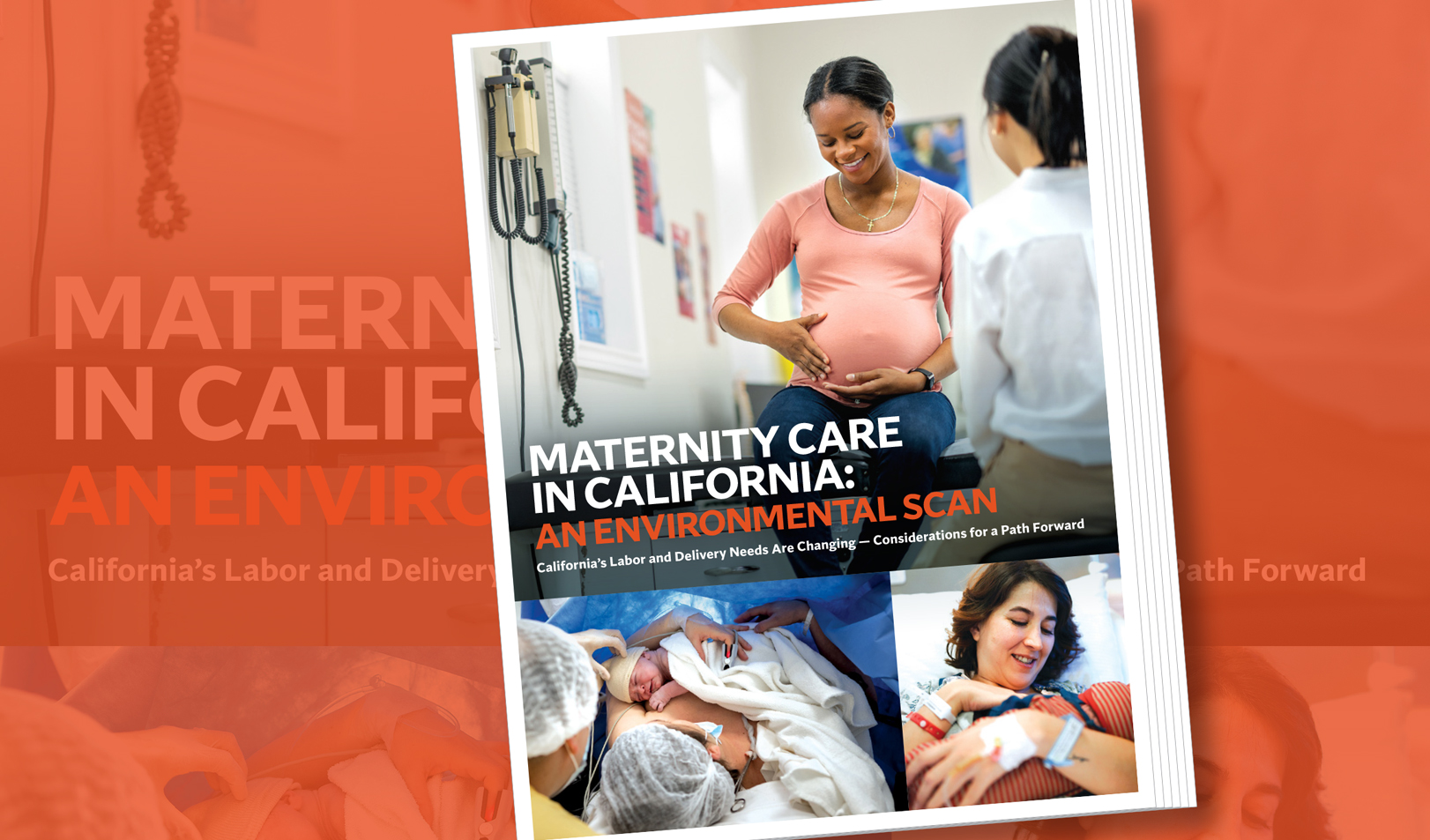
The California Maternal Quality Care Collaborative will host an informational webinar on Jan. 25 from noon to 1 p.m. (PT) for hospitals interested in joining the collaborative and using its Maternal Data Center to improve their perinatal performance. The California Maternal Quality Care Collaborative is a multi-stakeholder organization committed to ending preventable morbidity, mortality and racial disparities in California maternity care. The organization uses research, quality improvement toolkits, statewide outreach collaboratives and its Maternal Data Center to improve health outcomes for mothers and infants. Webinar details are available online.
National Advisory Committee Publishes Two New Policy Briefs on Rural Health
The National Advisory Committee on Rural Health & Human Services — a citizens’ panel of nationally-recognized rural health experts that provides semi-annual recommendations on rural issues to the Secretary of the Department of Health and Human Services — has released two new policy briefs. The first brief, titled Understanding the Impact of Suicide in Rural America, recommends that the Secretary 1) require the department to conduct a national comprehensive evaluation that assesses existing state and tribal efforts to reduce rural suicide rates and that identifies successful evidence-based, rural-specific strategies that can be implemented within states and tribal communities; and 2) require the Agency for Health Research and Quality and the National Institutes of Mental Health to conduct research on the use of community health workers to determine if these efforts can reduce suicide risk and increase referrals for at-risk individuals. The second brief, Modernizing Rural Health Clinic Provisions, offers a number of recommendations to improve the statutory and regulatory foundation of rural health clinics, which has not been updated in 30 years and is not well aligned to meet today’s health care needs.
CMS Regional Office to Hold Call on Data Submission for Quality Payment Program
The Centers for Medicare & Medicaid Services (CMS) San Francisco Regional Office will hold a call Feb. 1 at 3 p.m. (PT) to discuss data submission as part of the Quality Payment Program. Discussion topics include an overview of the submission process, program updates and options for clinicians in small practices to receive free technical assistance. Speakers include Dr. Ashby Wolfe, CMS’ chief medical officer for the San Francisco Regional Office, and Neal Logue, a CMS health insurance specialist. Registration is available online.