
Legal gray areas and heightened emotions can complicate decisions that often must be made under duress and may expose hospitals to significant litigation threats. And constant changes don’t help.
CHA’s Consent Law Seminar will prepare you to make tough decisions with confidence. Join us as expert faculty address legal nuances, share tips for handling delicate cases, and help you:
- Prepare for consent-related challenges around telehealth and AI
- Get up to speed on new laws and regulations
- Unravel confusing behavioral health consent requirements
- Explore hypothetical situations sure to test your critical thinking skills
- Understand how new rules apply to minors and disabled patients
From the basics to the complex, this is your opportunity to share experiences, earn continuing education (CE) credits, and hear how your peers are handling tough consent situations.
The Consent Law Seminar will feature a brief discussion of consent basics while the bulk of the program focuses on more complex issues and how to mitigate risk in complicated situations. This video thoroughly covers the basics of consent – it is a sound, concise resource for newer risk managers and privacy officers and encouraged viewing in advance of the seminar.
9:00 – 9:15 a.m. | Basics of Consent
This brief session will highlight key concepts related to consent and every competent adult’s fundamental right of self-determination over their body. This speedy session will also establish a foundation for addressing the challenging issues to be tackled throughout the seminar. Recommended pre-seminar viewing: Basics of Informed Consent webinar recording.
9:15 – 10:15 a.m. | Advanced Consent Issues
Building on the fundamentals, this session will explore complex and high-risk consent scenarios that challenge even seasoned practitioners. Topics include substituted decision-making, consent in emergent situations, evolving standards around documentation, and navigating conflicts between clinical judgment and patient choice. Through practical examples, participants will gain strategies for applying legal principles to nuanced, real-world situations.
10:15 – 10:30 a.m. | Break
10:30 – 11:30 a.m. | Digital Health/Artificial Intelligence
As digital health tools and AI become embedded in care delivery, traditional consent frameworks are being tested in new ways. Meanwhile, federal and state regulations are attempting to keep up with the rapid evolution of AI in healthcare. This session examines (i) the evolution of AI in healthcare; (ii) federal and state regulatory schemes and (iii) how informed consent intersects with algorithmic decision support, virtual care platforms, and patient-facing AI tools. Discussion will focus on transparency, workflow integration, and how organizations can responsibly communicate risk and limitations while maintaining patient trust.
11:30 a.m. – 12:30 p.m. | Behavioral Health
Consent in behavioral health settings raises unique challenges involving capacity, safety, privacy, and competing duties of care. This session will address practical considerations in evaluating decision-making ability, navigating involuntary treatment frameworks, and managing consent when clinical and legal standards may diverge. Participants will leave with clearer approaches to balancing patient autonomy with risk mitigation.
12:30 – 1:30 p.m. | Lunch
1:30 – 2:15 p.m. | Legislative Update
This fast-moving update highlights recent legislative developments shaping consent requirements across health care settings. Attendees will receive a concise review of noteworthy statutory changes, emerging trends, and anticipated developments that may affect policy, operations, and risk management in the coming year. The session focuses on practical implications and actionable takeaways for legal and compliance teams.
2:15 – 3:00 p.m. | Scenes from the Field (Part One)
Inspired by cinematic scenarios, this interactive session uses theoretical case studies to challenge participants’ critical thinking on difficult consent questions. Through facilitated discussion, attendees will analyze situations involving adverse event reporting, gray-area privacy issues, behavioral health complexities, and difficult discharge decisions. Expect lively debate and practical insights drawn from frontline experience
3:00 – 3:15 p.m. | Break
3:15 – 4:00 p.m. | Scenes from the Field (Part Two)
The conversation continues with additional case studies that push participants to apply consent principles in fast-evolving and emotionally charged circumstances. Faculty will guide attendees through decision points hospitals face in real time, emphasizing risk assessment, interdepartmental coordination, and documentation practices that can make the difference when outcomes are challenged.
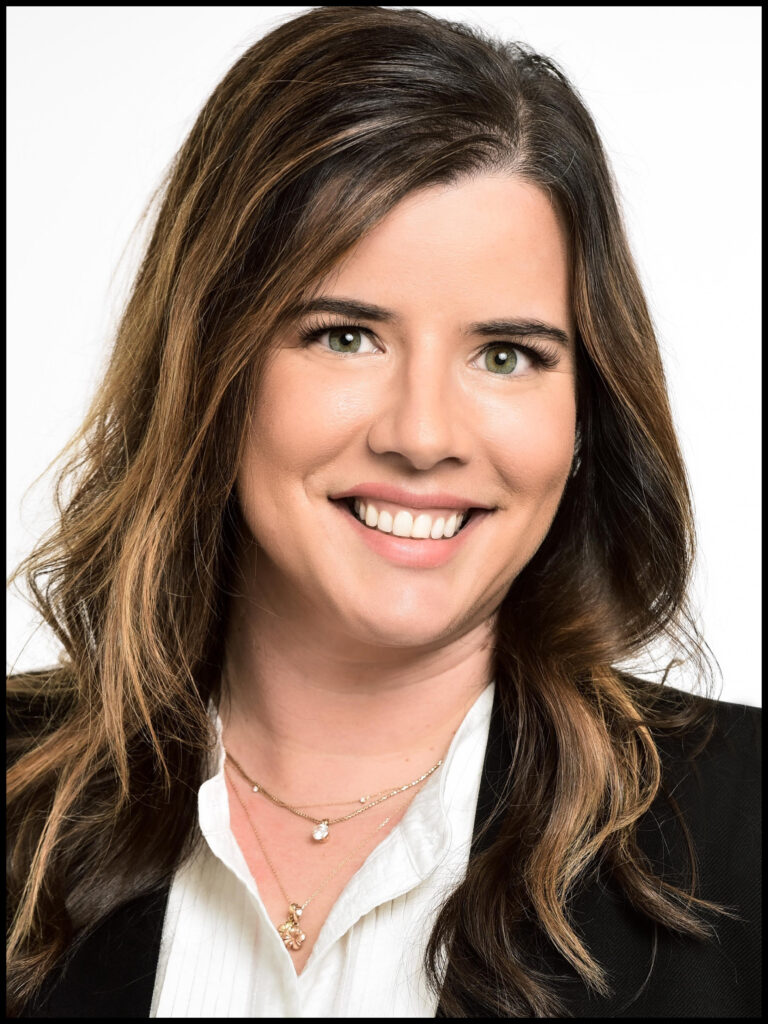
Alicia Macklin, Esq.
Partner
Hooper, Lundy & Bookman PC
Ms. Macklin is a trusted advisor to a range of inpatient and outpatient behavioral health care providers, along with hospitals and health systems. She has counseled many of California’s hospitals on unsettled areas of law, with an emphasis on compliance with the Emergency Medical Treatment and Labor Act (EMTALA). Her work with providers includes advising on licensing and accreditation, Medicare and Medi-Cal reimbursement, federal and state privacy and confidentiality requirements, and operational issues. She also helps California providers navigate voluntary and involuntary treatment under the Lanterman-Petris-Short Act (LPS Act).

Julia B. Michael
Deputy General Counsel and Chief Compliance Officer
K Health
Julia Michael is Deputy General Counsel and Chief Compliance Officer at K Health, where she leads legal strategy, compliance, privacy, information security, and responsible-AI governance for AI-enabled virtual care delivery at scale. She advises executive leadership on enterprise partnerships, regulatory strategy, and the safe integration of emerging technologies into clinical care. Previously, Julia spent more than a decade advising major health systems, including Kaiser Permanente and Providence, supporting hospital operations, multi-state telehealth expansion, digital innovation, and AI-enabled care delivery.

Sansan Murray
Senior Counsel
Kaiser Foundation Hospitals and Health Plan
Sansan Lin Murray is Senior Counsel for Kaiser Foundation Hospitals and Health Plan and is in the Hospital Operations and Care Delivery practice group. She is an experienced health care attorney with a demonstrated history of working with hospital and health care industry clients on a range of care delivery issues with a focus on legal, risk and compliance issues related to privacy and security, medical staff, credentialing, quality and consent.
May 14, 2026 | Burbank
Los Angeles Marriott Burbank Airport Hotel
2500 North Hollywood Way
Burbank, CA 91505-1019
Tuition fees are for in-person or livestream event on May 14.
Member/Government Early Bird $199*
Nonmember Early Bird: $570*
*Early bird pricing expires on April 24, 2026.
Member/Government: $299
Nonmember: $670
Members are CHA member hospitals, CHA associate members and government agencies.
Nonmembers are non-hospital health care providers, clinics, post-acute facilities, and law firms that serve hospitals.
Education programs and publications are a membership benefit and are not available to eligible non-member California hospitals.
Presentations will be available online only: You will receive an email before the event with instructions on how to download the presentations to your laptop/tablet for viewing on-site or to print and bring with you. Be sure to download the materials in advance; WiFi access on-site may be limited.
Cancellation Policy/Late Payment: A $75 non-refundable processing fee will be retained for each cancellation. Cancellations must be made in writing seven or more days prior to the scheduled session and emailed to education@calhospital.org. No refunds will be made after these dates for in-person or livestream events. Substitutions are encouraged.
Please note: payment is due on or before the program. Payments not received by the seminar date may be subject to a 10% late fee. In the unlikely event the program is cancelled, CHA will fully refund paid participants within 30 days.
Special Accommodations or Questions: If you require special accommodations pursuant to the Americans with Disabilities Act, or have other questions, please call (916) 552-7637.
Quality Assurance/Grievance: We welcome your feedback. If you have any concerns or dissatisfaction with the quality of a CHA education program please contact Robyn Thomason, Vice President, Education at (916) 552-7514 or email rthomason@calhospital.org. The CHA education quality assurance/grievance policy is available upon request by emailing rthomason@calhospital.org.
Photo and/or Livestream Video Release: CHA may photograph and/or livestream this event. If you prefer not to be photographed or visible during the livestream, please email CHA at education@calhospital.org.
Full attendance at the educational session or livestream event is a prerequisite for receiving professional continuing education (CE) credit. Attendees must sign in at the seminar, complete post-event survey and, when required, include state bar or professional license number. Livestream participants must attest to participation in post-event survey. CE certificates will be emailed approximately three weeks after the seminar. Lunch and breaks are not included for continuing education credit. (Amount of CE offered subject to change.)
Compliance — The Compliance Certification Board (CCB)® has approved this event for up to 6.60 Live CCB CEUs, based on a 50-minute hour, each.. Continuing Education Units are awarded based on individual attendance records. Granting of prior approval in no way constitutes endorsement by CCB of this event content or of the event sponsor.
Healthcare Executives — CHA is authorized to award 5.5 hours of pre-approved ACHE Qualified Education credit for this program toward advancement, or recertification, in the American College of Healthcare Executives. Participants in this program who wish to have the continuing education hours applied toward ACHE Qualified Education credit must self-report their participation. To self-report, participants must log into their MyACHE account and select ACHE Qualified Education Credit.
Legal — CHA is a State Bar of California approved MCLE provider. This participatory activity has been approved for 5.5 hours of MCLE credit. Provider #1980.
Nursing — Provider approved by the California Board of Registered Nursing, Provider Number 11924 for 5.5 contact hours.
Risk Management — This meeting has been approved for a total of 5.5 contact hours of Continuing Education Credit toward fulfillment of the requirements of ASHRM designations of FASHRM (Fellow) and DFASHRM (Distinguished Fellow) and towards CPHRM renewal.
The Consent Manual is no longer distributed at or associated with this seminar; it is available free to members in the CHA Publications App!
The app provides access to all CHA publications from any desktop or mobile device and features there-and-back cross-reference links and enriched search performance to make finding fast answers to tough questions easier than ever. There is nothing to download – the app is a super-enhanced website that brings unprecedented interactivity to CHA Publications and takes no storage space on your device. You may download PDFs from the app, CHA no longer produces printed manuals.
The 2026 edition of the Consent Manual will be posted to the app as soon as it is completed.
The CHA Publications App is available to nonmembers through an annual subscription, there are individual and enterprise license options.
More information about the CHA Publications App is available here.
Livestream attendees can ask questions during the program, just like in-person attendees, and have the same access to presentations as in-person attendees.
Livestream tuition entitles the registrant to:
- a single connection to the event (NOTE: don’t risk your connection by sharing with others — only one connection will be allowed in.)
- CEs (you must attest to participation to receive CE credit) (a $50 per person CE application fee may apply for additional participants)